Water Scarcity Is an Energy Problem Too: The Water-Energy Nexus in Cooling
Facility teams usually file water and electricity under separate budgets, separate meters and separate worries. Inside a cooling plant, though, the two are welded together: every decision about one quietly changes the cost of the other.
Cooling Spends Water to Save Energy — and Energy to Save Water
An evaporative cooling tower rejects heat by evaporating water. Use less water — by throttling evaporation or letting mineral levels climb — and the condenser runs hotter, so the compressor burns more electricity for the same cooling. Push the other way, dumping extra water through blowdown to keep conditions gentle, and the power bill eases while the water bill swells. There is no free direction; there is only a balance point, and most plants sit well away from it.
Scale Is Where the Two Bills Collide
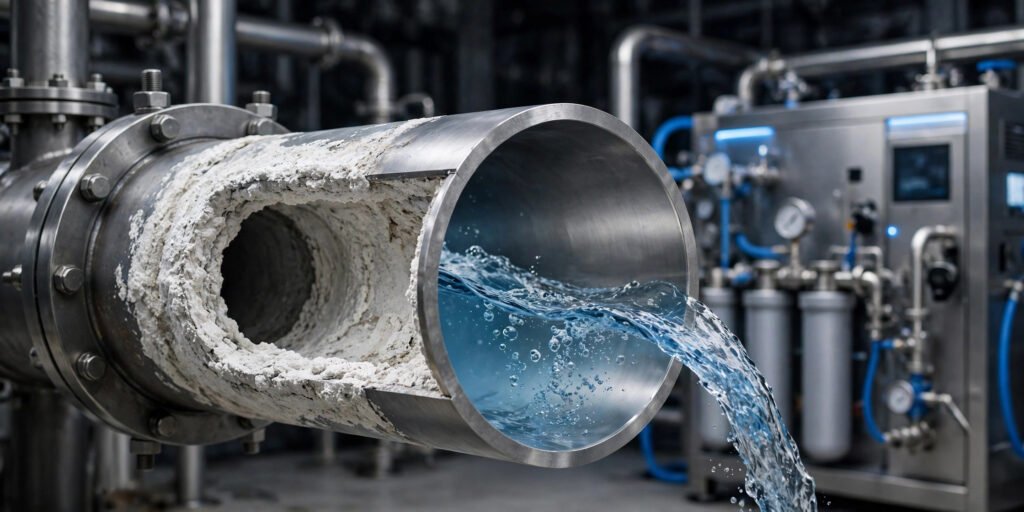
When treatment slips, the same deposit hurts twice. Scale on condenser tubes forces the chiller to work harder — an energy penalty paid every hour. At the same time, the usual defensive response is heavier blowdown, which throws away treated water that has already been pumped, filtered and dosed. One problem, two invoices.
Running Closer to the Balance Point
The sites that escape this trap share a few habits:
- They control blowdown from measured conductivity, not from a timer set years ago
- They keep tube surfaces clean continuously instead of in bursts, so hotter condensing conditions are never “needed”
- They trend kW/TR and cycles of concentration side by side, so a saving in one utility is never bought blindly with the other
- They treat water quality as an energy measure, not just a maintenance chore
As water gets scarcer and tariffs rise, the plants that thrive will be the ones managing the two resources as one system. See how smarter blowdown control helps.